How does ChillSense go from box to live readings?
Wireless sensors, an on-site hub, and an Australian-hosted cloud turn readings into dashboards, sustained-drift alerts, and HACCP-ready PDF reports. Most customers are live within an hour of the box arriving.
1. Sensors
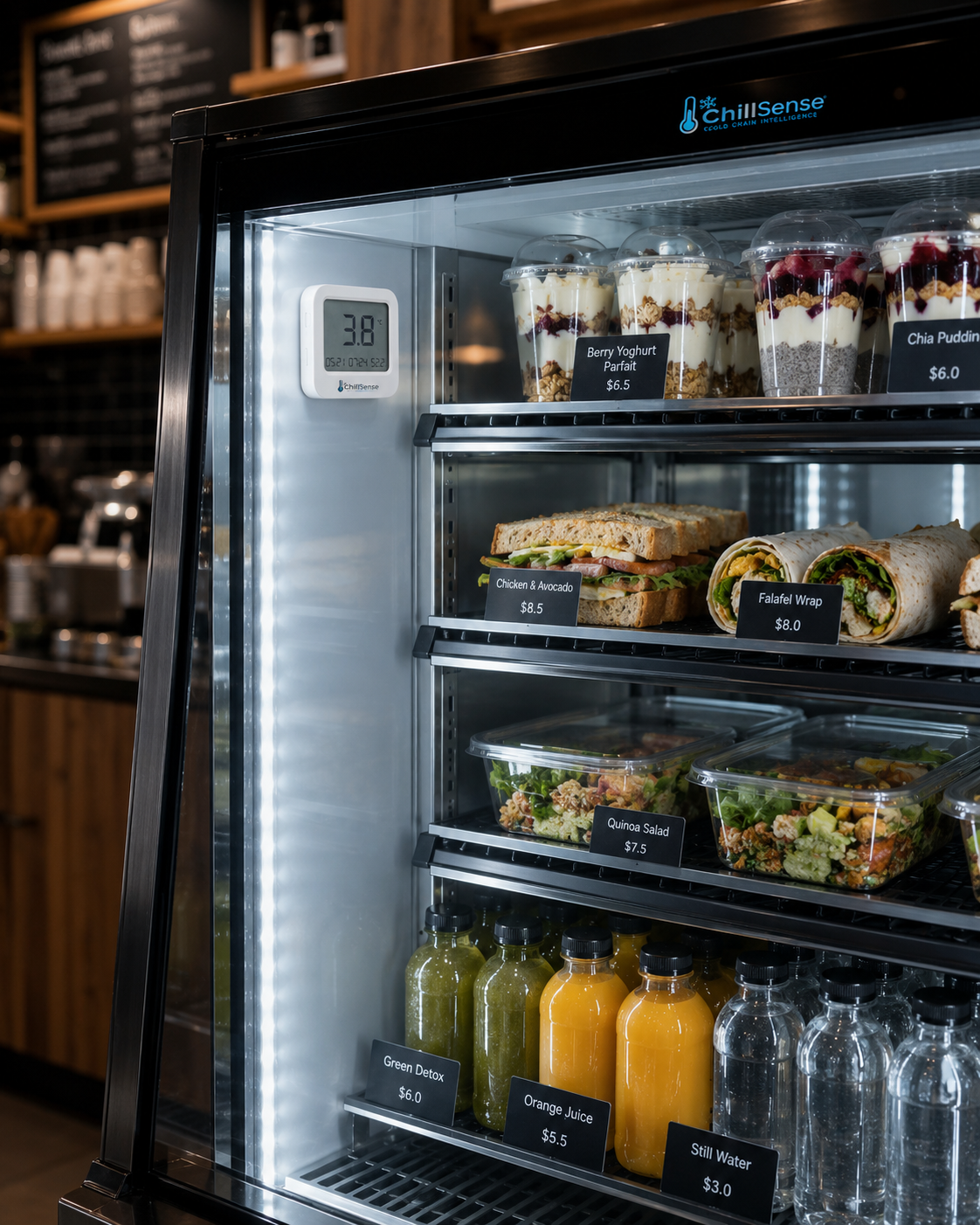
The ChillSense Sensor is a compact, battery-powered wireless sensor that lives inside (or right beside) a fridge, freezer, cool room, display cabinet, or prep table. It measures temperature and humidity continuously and sends readings to a nearby hub at the standard reporting interval.
- Battery-powered. No wiring, no drilling, no power lead near food.
- Built for cold and damp. Condensation, door slamming, and walk-in cool-room conditions are normal operating conditions.
- Moveable. When an asset is decommissioned the sensor moves with the new one; historical readings stay attached to the asset.
See Placing sensors for the placement rules that make readings reliable.
2. The hub
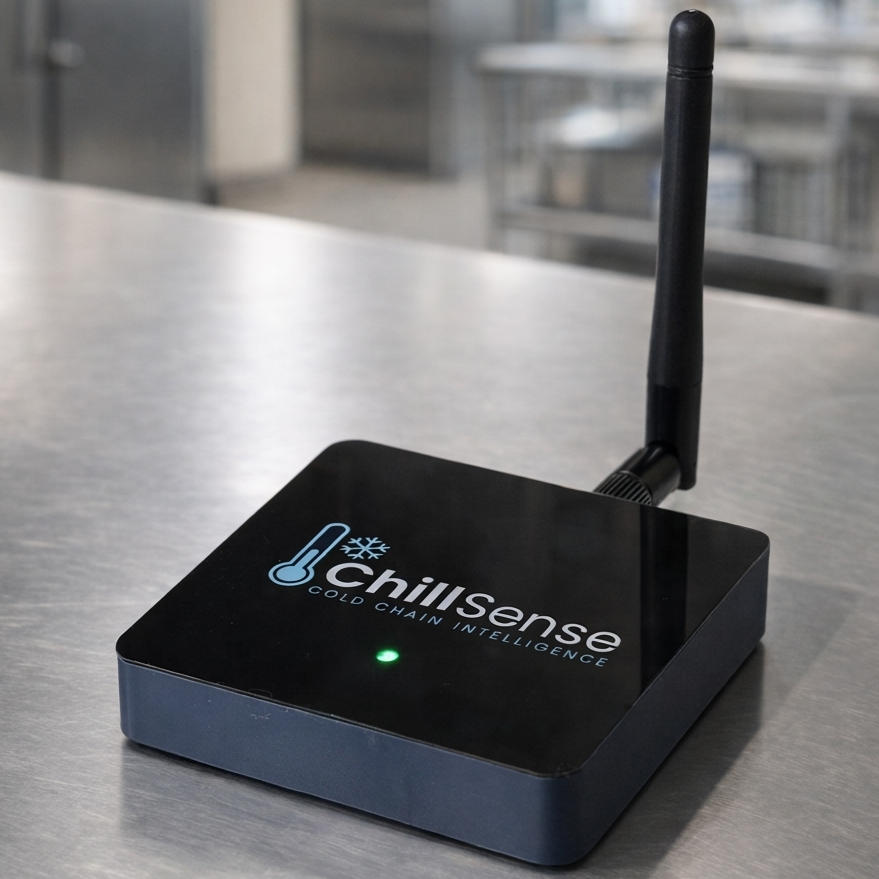
The ChillSense Hub is the on-site brain. It pairs with nearby sensors over a low-power wireless link, collects their readings, and streams them securely to the cloud over your 2.4 GHz Wi-Fi network.
- One hub typically covers a cafe, restaurant kitchen, or small retail back-of-house. Larger sites simply add a second hub - no extra subscription.
- Local buffering. Short Wi-Fi or internet outages do not drop readings; the hub holds them and forwards when the connection returns.
- No software to install. Setup is a guided join from your dashboard. The hub LED tells you at a glance whether it is unprovisioned, joining Wi-Fi, connecting to the cloud, or healthy.
3. The Australian-hosted AI cloud
The cloud is where the dashboards, sustained-drift alerts, HACCP reports, and drift-detection analytics live. Everything runs on infrastructure inside Australia, and your data is isolated per customer rather than mingled with anyone else's.
- A secure ingest pipeline that authenticates each hub.
- A per-customer dashboard with sites, areas, and assets that mirror your business.
- A rules-and-drift alert engine with sustained-drift filtering, escalation, and email + SMS delivery when configured.
- A HACCP report generator producing monthly PDFs designed to support your audit preparation.
- An AI-assisted insight layer that compares recent readings to each asset's baseline and surfaces sustained drift (not a mechanical fault diagnosis).
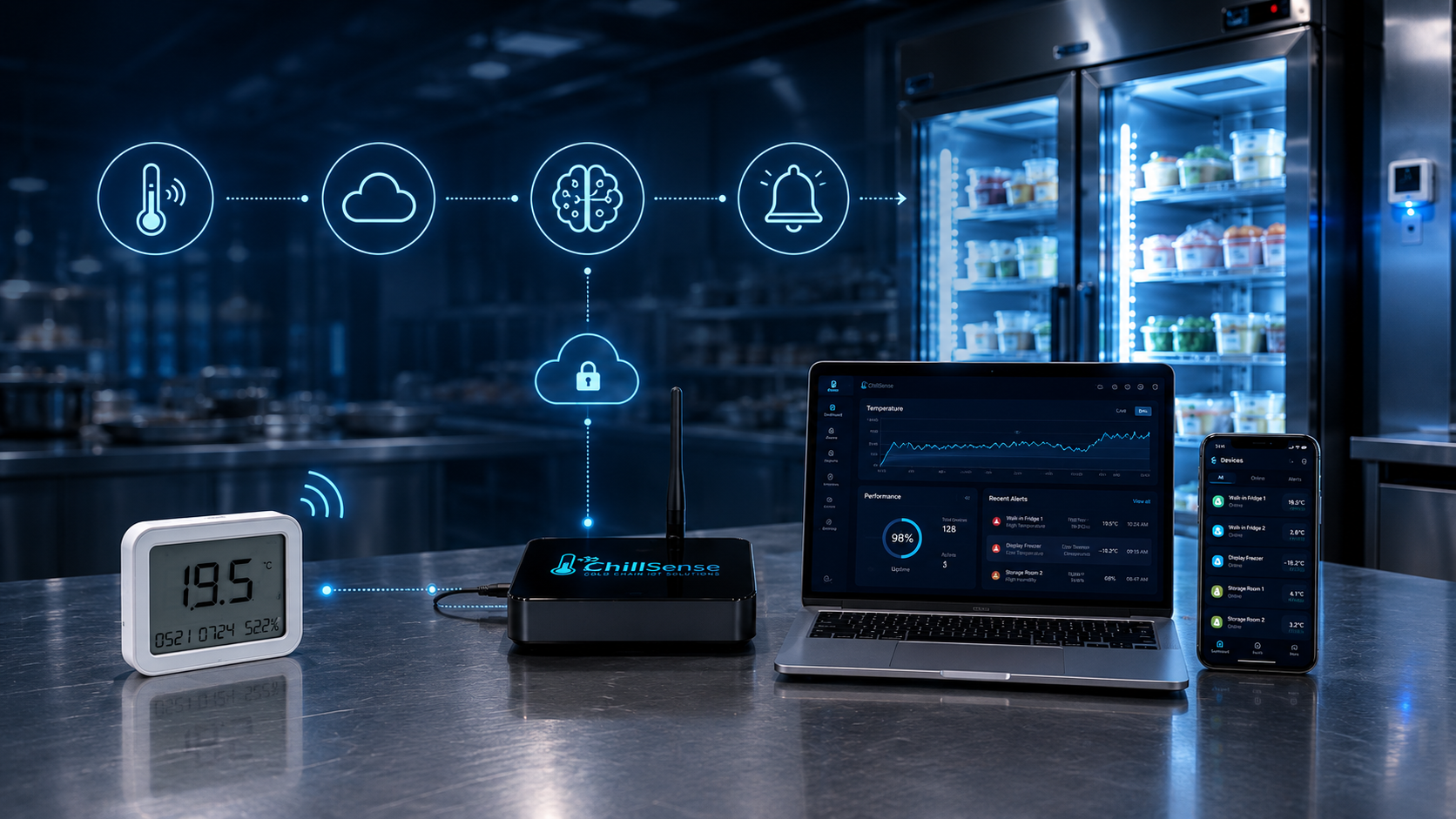
End-to-end data flow
Each reading carries the customer, hub, sensor, temperature, humidity, signal strength, and battery level — stamped at the sensor so the historical record is honest about when an event happened, not when the network reconnected.
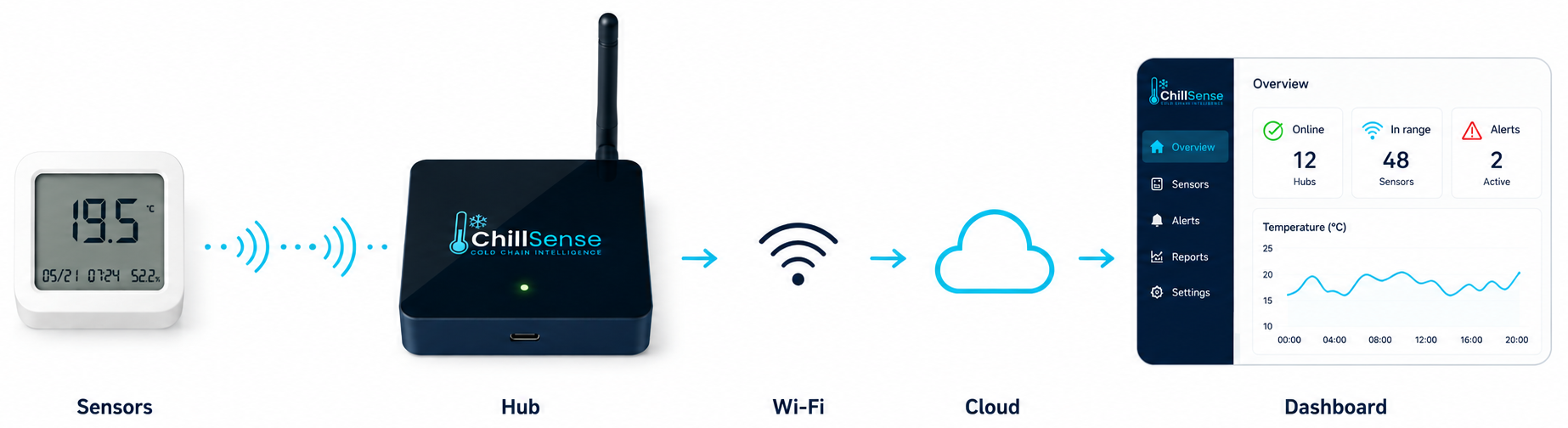
What you do at setup
Four moves, and most customers are on the dashboard within an hour of the box arriving. See Setting up ChillSense for the full step-by-step.
Plug in the hub
Follow the prompt in your dashboard to claim it to your site and join Wi-Fi.
Pair sensors
One at a time, near the hub, naming each one after the asset it will monitor.
Set thresholds & contacts
Per asset, then confirm a test alert reaches the right people.
What you do day to day
Almost nothing, by design. The platform watches the assets so your team does not have to:
- Daily: a 20-second dashboard glance at the start of service is the only manual habit we recommend.
- Per alert: the staff member who receives an SMS or email taps through to a mobile-friendly action page, acknowledges, records the corrective action, and the incident is closed and audit-trailed — no login required.
- Monthly: review or share the auto-generated HACCP report with your food safety officer; no formatting required.
See Using the dashboard, Alerts and notifications, and HACCP reports for the full how-to.
How it fits with what you already use
Your fridges
Sensors live inside or beside the asset; you do not modify the appliance.
Your Wi-Fi
2.4 GHz, universally available on small-business networks. Standard outbound HTTPS.
Your food safety plan
ChillSense complements it; doesn't replace it. HACCP PDFs drop straight into the records section.
Your team
Anyone who can open a web page can use the dashboard; staff actioning alerts never have to log in.
Ready to size a deployment?
Configure your monitoring Solutions by industry Contact us →