Built in a real food business: how Noshing turned cold-chain uncertainty into action
Noshing’s cool rooms hold far more than stock. They protect expensive ingredients, batches that take days to produce, finished dairy-free cheeses awaiting dispatch, and the shelf life needed to supply customers reliably.
When rising energy bills and limited visibility put those assets at risk, Noshing began monitoring what was actually happening inside its refrigeration equipment. The lessons learned became ChillSense.
At a glance
Reduction in monthly power bills*
MWh energy use per billing cycle*
Major energy hotspot found in the main cool room
Continuous visibility across critical cold assets
*Results from Noshing’s documented early power-monitoring deployment, which informed the development of ChillSense.
The business
Noshing was founded by Michelle Farina. It is a family-owned food manufacturer in Malaga, Western Australia, producing award-winning, handcrafted dairy-free cheeses using natural ingredients and traditional techniques — including pressing curds, ageing cheeses, and mould-ripening products in a cheese cave.
That approach produces exceptional cheese, but it also makes refrigeration critical infrastructure. A cool-room problem can put ingredients, work in progress, finished products, production schedules, and customer orders at risk.


The challenge: too much depended on equipment nobody could see
After moving into a new production facility, Noshing began receiving unexpectedly high electricity bills. The total consumption was clear, but the cause was not.
Without asset-level data, the team could not tell which cool room, fridge, or process was responsible — or whether the problem was caused by equipment settings, maintenance, operating patterns, or a developing fault.
Temperature presented a similar concern. If a fridge or cool room drifted out of range overnight, the team might not know until the following morning. By then, they could be facing spoiled product, lost production, reduced shelf life, missed orders, and difficult food-safety decisions.
Manual checks could record a temperature at a particular moment. They could not explain what happened between checks, how long an excursion lasted, or whether an asset had been deteriorating over time.
The solution: make every critical asset visible
Noshing began with a simple power-monitoring deployment that measured individual equipment rather than relying only on the facility’s total electricity bill.
The data quickly revealed that the main cool room was consuming excessive energy. With evidence pointing to a specific asset, the team could investigate and act. Adjusting defrost cycles and repairing seals helped reduce energy consumption from 11 MWh to 8 MWh per billing cycle — a 30% reduction in the monthly power bill.
The monitoring equipment could then be moved to other rooms and machines to uncover further opportunities.
But the experience exposed a broader need. Food businesses needed an affordable system that could continuously monitor temperature and humidity, alert people when conditions moved out of range, and retain a clear history of what happened — with the same asset-level discipline Noshing had learned from power monitoring.
The in-house solution developed around Noshing’s operational needs became ChillSense.
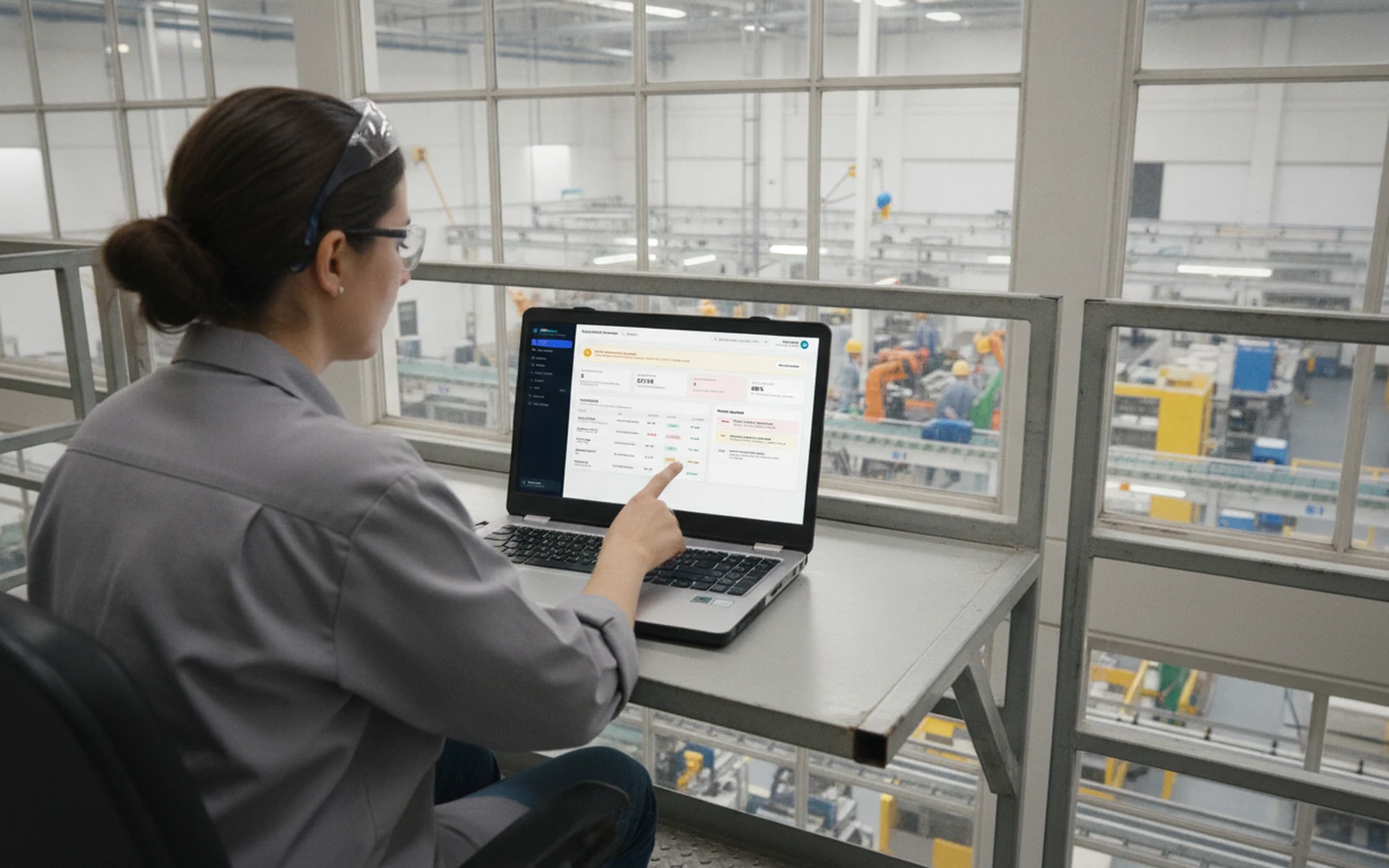

From reactive checks to continuous cold-chain visibility
ChillSense gives Noshing a live view of the fridges, freezers, and cool rooms its production depends on.
Instead of relying on isolated manual readings, the team can see how each asset behaves over time. Sustained temperature drift can trigger an alert while there is still an opportunity to investigate, move product, or arrange maintenance. Short-lived events such as normal door openings can be separated from conditions that require action.
Historical readings also provide context after an incident. The team can see when conditions changed, how long they remained outside the expected range, and what corrective action was taken.
Noshing’s early power-monitoring work also showed that an asset may still hold temperature while running harder and consuming more energy than comparable equipment. Identifying that pattern early can reveal worn seals, unsuitable defrost settings, restricted airflow, or developing mechanical problems before they become more expensive — lessons that shaped how ChillSense thinks about operating discipline.
The outcome
For Noshing, better monitoring has delivered benefits across the business.
Lower operating costs
Asset-level data identified the main cool room as an energy hotspot, helping reduce monthly electricity costs by 30%*.
Reduced spoilage risk
Continuous monitoring makes overnight temperature drift visible while there may still be time to respond.
Better maintenance decisions
Real operating data helps the team direct attention to the equipment that needs it most.
Clearer food-safety records
Timestamped readings and corrective actions provide a stronger account of what happened than a paper log alone.
Greater operational confidence
The team can check critical assets without being physically present at the facility.
A repeatable improvement process
Monitoring can expand across additional rooms and equipment as the business grows.
*Energy cost reduction from Noshing’s documented early power-monitoring deployment.
Built inside a real food business
ChillSense did not begin as a theoretical technology project. It began inside Noshing — founded by Michelle Farina — with the practical realities of protecting valuable products, controlling energy costs, maintaining shelf life, and knowing what happened inside a cool room overnight.
That experience shaped a system designed for real food businesses — simple to deploy, affordable to expand, and focused on giving operators information they can act on.
“It came from a very real problem we had while running Noshing.”

What could ChillSense reveal in your business?
Start with the fridge, freezer, or cool room that concerns you most. Within days, you can begin seeing how it behaves and when it drifts.
Customise your solution → Food manufacturer solutions All case studies →